Rated 4.8 on Trustpilot
Read Reviews

·
Roofing
Do You Need a New Roof Before Solar?
Panels are designed to sit on a roof for decades. If the covering underneath has less time left than that, someone pays to take them off and put them back. How to tell which situation you are in.
By
Solar Panels London
·
Last reviewed
Sometimes, and less often than you might fear.
The question matters because of a mismatch in lifespans. A solar system is designed to run for decades. A roof covering has a finite life of its own, and if that life is shorter than the system's, then at some point the array has to come off so the roof can be done, and then go back on again. That is a cost that is rarely budgeted for, usually landing years later, and usually landing on the homeowner.
So the honest version of the question is not "is my roof old?" It is: does this roof have enough life left to justify what is about to be fixed to it?
Here is how to work that out, what the roofing industry itself says, and the gap in the rules that explains why this keeps catching people.
Key points
The test is remaining life, not age. A well-maintained older roof can be a better bet than a poorly detailed newer one.
The National Federation of Roofing Contractors is unambiguous: if the roof does not have enough life left, deal with the roof first.
MCS requires your roof's structure to be checked, but does not require anyone to assess how much life the covering has left. That is the gap.
Doing both together is cheaper than doing them separately, because the access is the expensive part.
If the answer is that your roof is fine, that should be said plainly, and we do say it.
Why this comes up at all
Solar panels are a long-lived product. They are fixed through the roof covering into the structure beneath, they cover a large part of the roof plane once installed, and they make the area under them much harder to inspect and repair.
Put an array on a covering with a handful of years left and three things follow. The roof will need doing during the system's life. The panels will have to come off and go back on for it to happen, which is a job in itself. And in the meantime, any leak that develops under the array is both harder to find and harder to reach.
The National Federation of Roofing Contractors published on exactly this in March 2026, and listed the risks plainly: premature roof failure and deterioration of roof coverings, water ingress and leaks beneath the panel array, restricted access for inspection and repair, costly removal and reinstatement of panels if the roof fails prematurely, and disputes between trades over who is responsible.
Their conclusion is worth quoting directly, because it could hardly be put more plainly:
"A roof should have sufficient remaining lifespan to justify a 20-to-30-year solar system being mounted to it. If it does not, the correct approach is simple. Address the roof first."
The gap in the rules
You might reasonably assume the installation standards deal with this. They partly do, and the part they miss is the important one.
MCS, the certification scheme that covers domestic solar installation, requires the roof structure to be checked before an installation, by a suitably competent person, to confirm it can carry the load. Where the structure is in any way unusual or there is any doubt, a qualified structural engineer must be consulted. It also requires the roof warranty provider to be consulted where the existing covering is under warranty.
All of that is about whether the roof can hold the array up. None of it is about how much life the covering has left.
So a roof can pass its structural check comfortably, the installation can be entirely compliant, and the covering can still be five years from needing replacement. Nothing in the process is designed to catch that. It depends on whether the company quoting you raises it.
That is worth knowing when you are comparing quotes, because it tells you something about who is looking at the whole picture and who is looking at the roof as a mounting surface.
How to judge whether yours needs doing
There is no published table of roof lifespans worth relying on. The roofing industry deliberately does not set one, and figures found online are not backed by any authoritative source. Age alone tells you very little — how a roof was detailed, how it has weathered and whether it has been maintained matter more than the year it went on.
What actually informs the judgement:
Whether it is leaking, or has been. Past repairs, staining in the loft, damp on ceilings below. A roof with a history is telling you something.
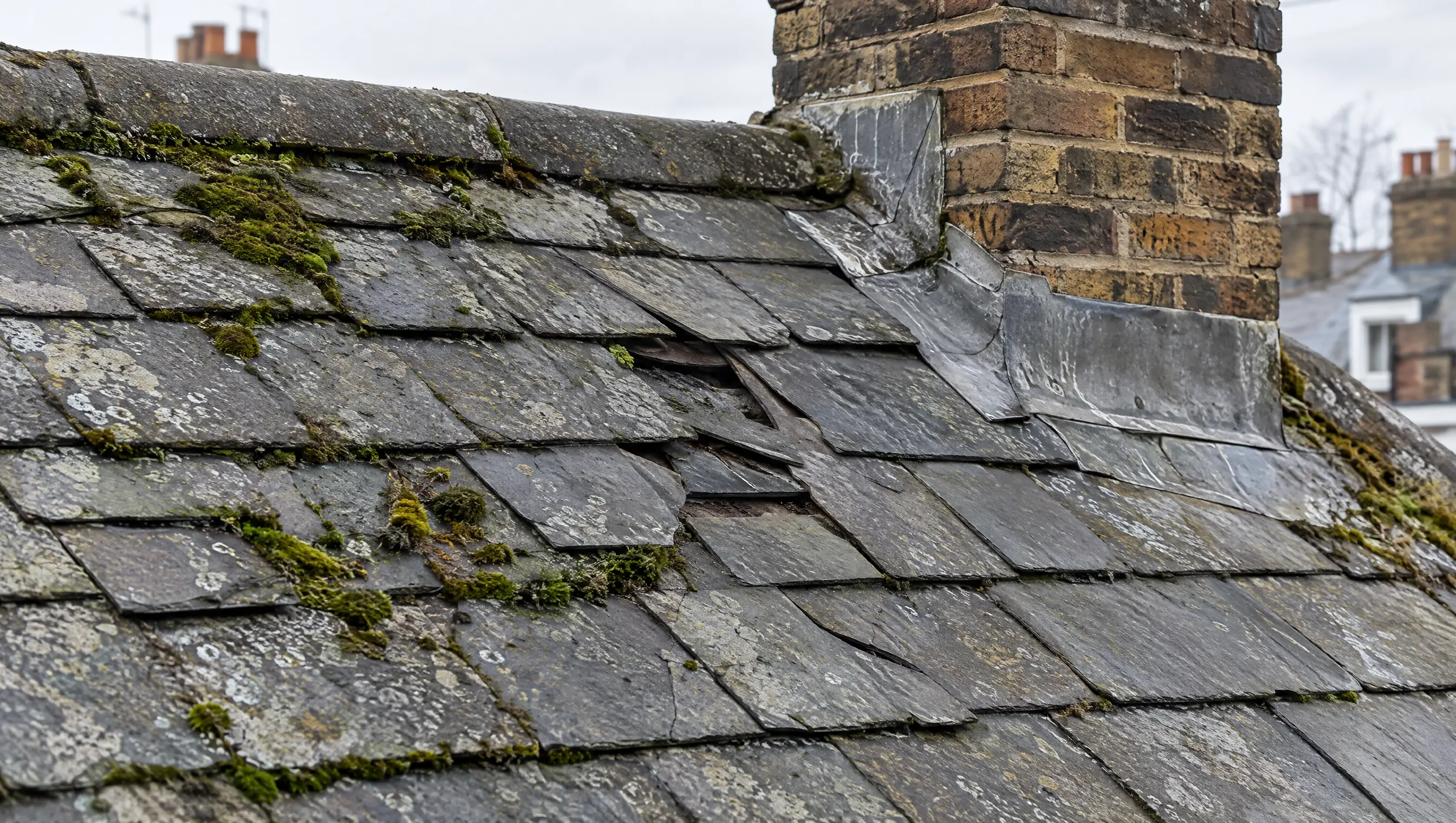
The condition of the covering itself. Slipped, cracked or missing slates and tiles. Delamination or flaking on slate. Surface erosion on concrete tiles. Widespread moss holding water against the covering.
The state of everything that is not the covering. Flashings, valleys, ridge and hip bedding, verges. These fail before the field of the roof does and they are exactly the places a leak appears.
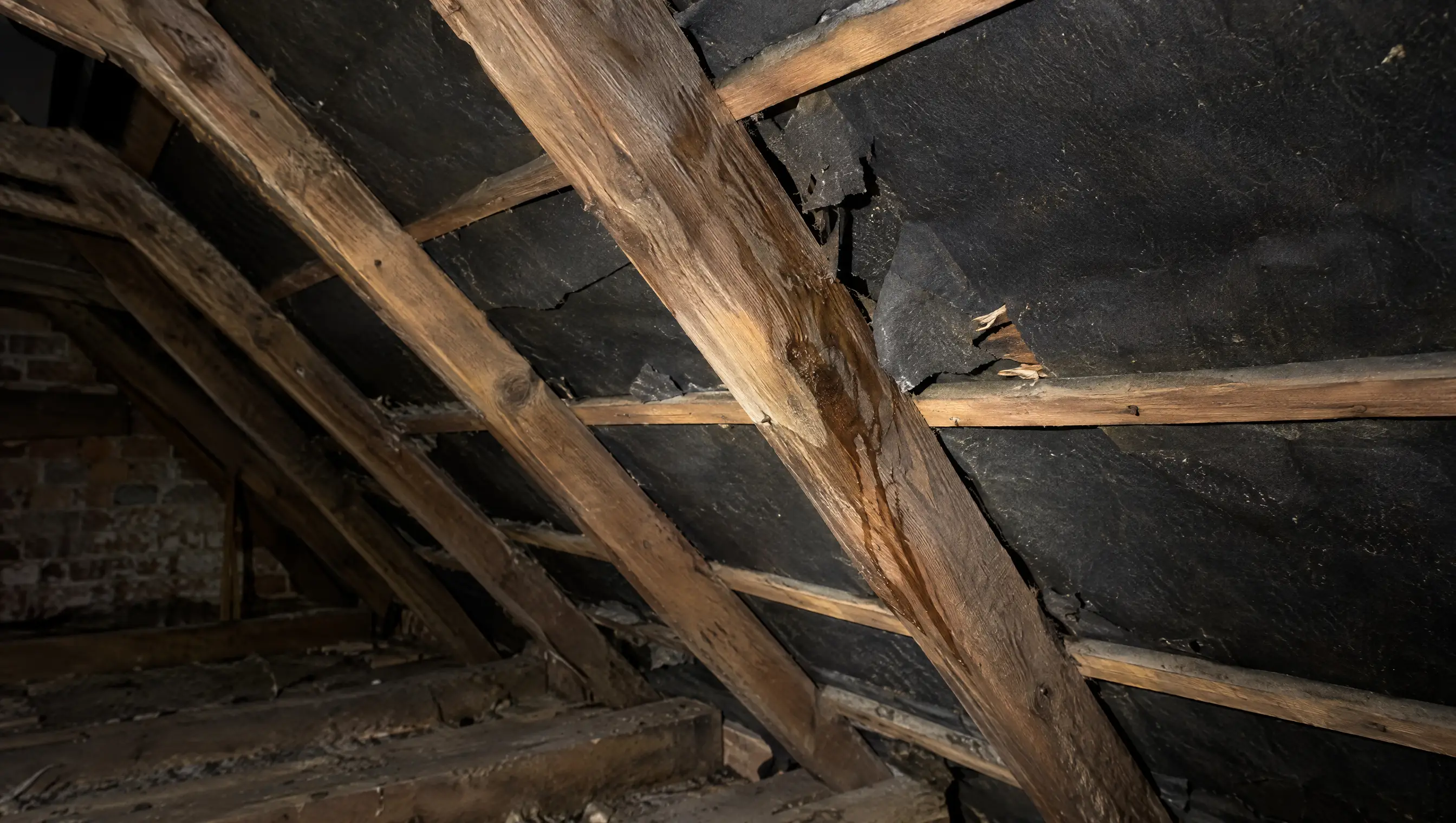
The battens and the underlay. Older roofs may have bitumen felt that has gone brittle, or battens that have suffered where water has been getting past. This is visible from the loft on many roofs and is one of the more telling checks.
Whether it has been re-covered before, and how. A roof carrying a heavier covering than it was built for is a structural question as well as a condition one.
What is happening in the roof space. Timber condition, evidence of past or present water, ventilation.
None of that is a checklist you can complete from the ground with a phone camera, which is why it is a survey rather than a form.
The three situations you are likely to be in
The roof is sound and has decades in it. Then the answer is to get on with the solar. If that is what we find, that is what we will tell you.
The roof needs work but not replacement. Localised repairs, flashings, a valley, some slipped slates. Usually worth doing before the array goes on, because afterwards the affected area may be under panels. This is a modest job, not a re-roof, and it should be priced as one.
The covering is near the end of its life. Here the sequencing genuinely matters, and doing the roof first is almost always the better value. Not because a re-roof is cheap, but because the alternative is paying for the same access twice and adding a panel removal and refit on top.
Why doing both together costs less than doing both separately
The expensive parts of a roof job and a solar job overlap.
Both need scaffolding. On a London terrace that usually means a highway licence from the borough and often a parking bay suspension, which has to be applied for in advance. Both need site set-up, waste handling and a programme. Doing them as one contract means paying for that once.
There is also the sequencing benefit. New fixings can be detailed into a new covering properly, from the start, rather than worked into an old one. There is no second disturbance of a roof that has just been made watertight. And there is one company responsible for the result, which matters more than it sounds — the disputes the NFRC warns about are over which trade is responsible.
If your roof is going to need doing anyway, the time you install solar is the sensible time to do it.
What if you already have panels on a roof that needs work?
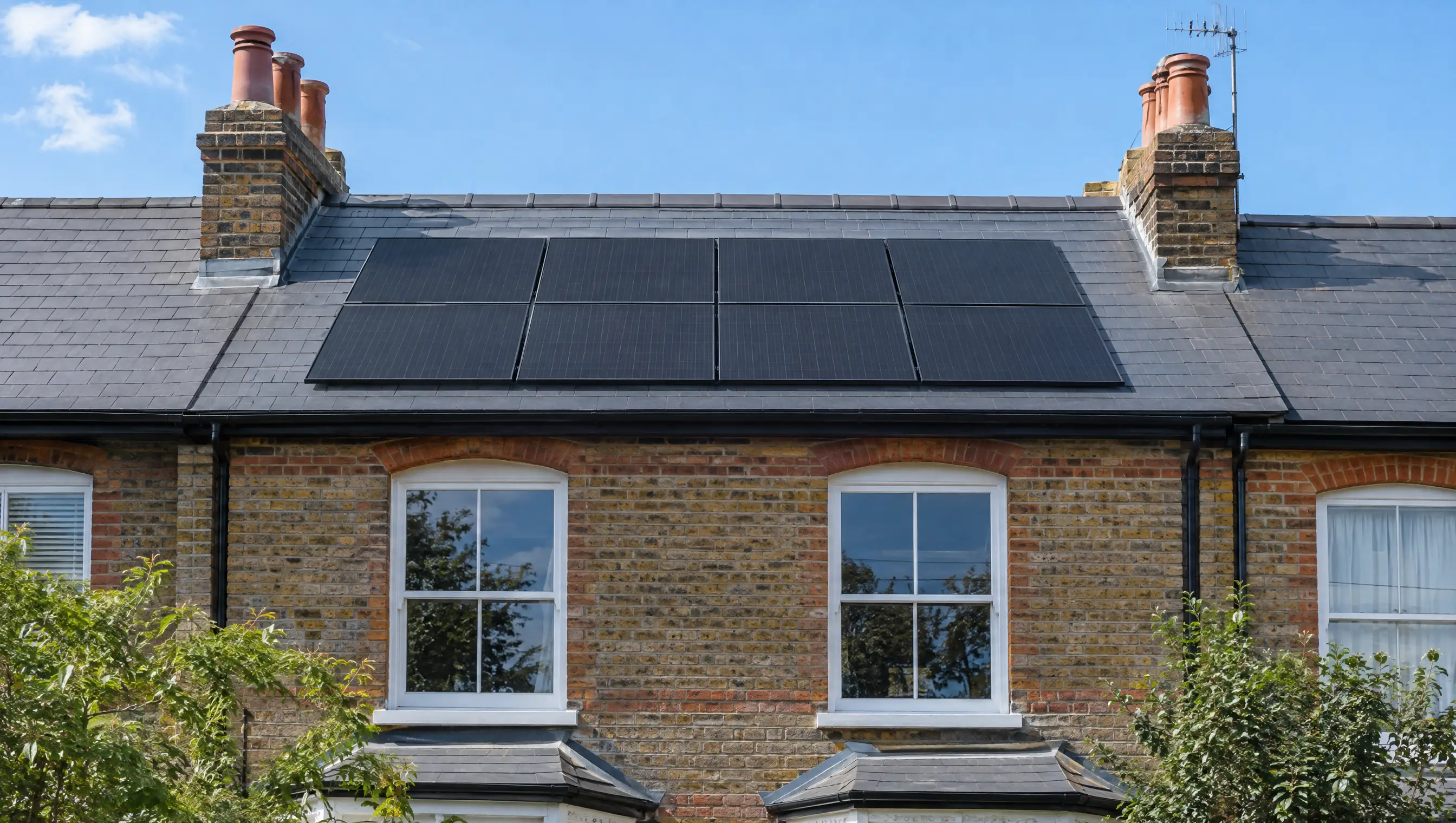
Different question, same underlying problem, and the answer is that the array comes off and goes back on. Your Feed-in Tariff is very unlikely to be affected, though there are things to check first. We have written about that separately.
Frequently asked questions
How old is too old?
There is no age. A well-detailed, well-maintained older roof can outlast a poorly executed newer one. The test is remaining life, judged on condition.
Will an installer tell me if my roof is a problem?
They should. Nothing in the MCS process requires it, so it depends on the company. It is a fair question to ask directly when you are getting quotes.
Can you just avoid the bad section?
Sometimes. If the problem is localised and the array can sit on a sound plane, that can work. It is a site judgement.
Does a new roof mean new planning considerations for the solar?
Not usually in itself, but if you are in a conservation area or the property is listed there are rules that apply to the solar regardless. That is a separate subject and we have covered it.
Will the solar damage my roof?
Properly detailed, no. Penetrations should be weathered with purpose-made flashings or fixing kits rather than relying on sealant, which is the most common cause of problems we see.
Should I just wait and do the roof later?
You can, but understand what you are choosing: paying for scaffold access twice and a panel removal and refit in between.
What we would do
Survey the roof properly — covering, flashings, valleys, ridge, verges, the roof space, structure and ventilation. Tell you honestly which of the three situations you are in. Where work is needed, separate what has to happen before the solar from what can wait. And where the roof is fine, say so, because a company that never finds a roof acceptable is telling you something about itself.
We handle both trades, with the roofing delivered under our contract, so if it does need doing there is one programme, one scaffold and one company answerable for the result.
Book a roof and solar survey. If you are not sure whether your roof is ready, that is exactly the thing worth finding out before you commit to anything.
Latest Articles





Ready to Start Saving with Solar?
Get your free no-obligation quote today. Our experts will design the perfect system for your home.
Free Home Survey
MCS Certified
Finance Available


Quick Links
Services
Contact
© 2026 Solar Panels London. All rights reserved.