Rated 4.8 on Trustpilot
Read Reviews

·
Faults & Servicing
Signs Your Solar Inverter Is Failing
Fault lights, restarts, a blank screen or falling output. How to tell a failing inverter from a normal winter dip, what you can safely check, and when to stop and call an engineer.
By
Solar Panels London
·
Last reviewed
Your inverter converts what your panels produce into electricity your home can use. It is also the part of a solar system most likely to need replacing during the life of the panels: MCS notes that panels can last over 25 years, but the inverter may need replacing in that time.
The good news is that inverters usually tell you something is wrong. The trick is knowing which signs are worth worrying about, which are normal, and which mean you should stop and call someone.
Key points
Most inverter warnings are shown on the display, a status light or your monitoring app.
Low output in winter is normal. Compare like with like before assuming a fault.
Lost monitoring is not the same as lost generation.
Burn marks, buzzing or crackling, heat, or breakers that keep tripping mean call an engineer now.
Never open the inverter or remove its covers.
The signs to look for
A fault or warning light that will not clear
Many inverters show a green light in normal operation and a red or amber one when something is wrong. An occasional fault that clears itself, such as a trip caused by the grid voltage or frequency moving out of range, can be normal. A warning that stays on, or keeps coming back, is worth investigating.
Light colours and codes differ between brands, so your manufacturer's manual is the place to look up what yours means.
A blank display in daylight
If the screen is dark on a bright day and nothing is showing in your app, the inverter may not be running at all. Check the consumer unit before assuming the worst (see below).
It keeps switching off and on
Repeated restarts through the day can point to a fault in the inverter, a problem on the panel side, or high voltage on your local grid. If yours cuts out on sunny middays and recovers later, read our guide to why inverters shut down on sunny days.
Output has dropped compared with a similar day
A system that used to produce a certain amount on a clear day and now produces much less may have a failing inverter, or a problem with part of the array.

Unusual noise or heat
Inverters normally make a faint hum, and some have cooling fans. A fan that has become noticeably loud, has stopped, or an inverter running much hotter than usual can be a sign of trouble. So can blocked vents: MCS maintenance checks include confirming the inverter has unobstructed airflow.
Before you assume the inverter has failed
Is it just the season?
Solar output in the UK changes hugely through the year. Government analysis of metered output from Feed-in Tariff solar systems found that in October to December 2024, typical output was around a third of what it had been in April to June 2024. A low figure in December is not a fault. Compare this week with the same week last year, or with a similar-weather day, rather than with July.
Is it just the monitoring?
If your app has stopped updating, the problem may be your home Wi-Fi, a router change or the monitoring dongle, not the inverter. Look at the inverter's own display: if it shows the system generating, it probably is.
What you can safely check yourself
Read the inverter display or status light, and note any code. Take a photo.
Check your monitoring app and compare today's output with a similar day.
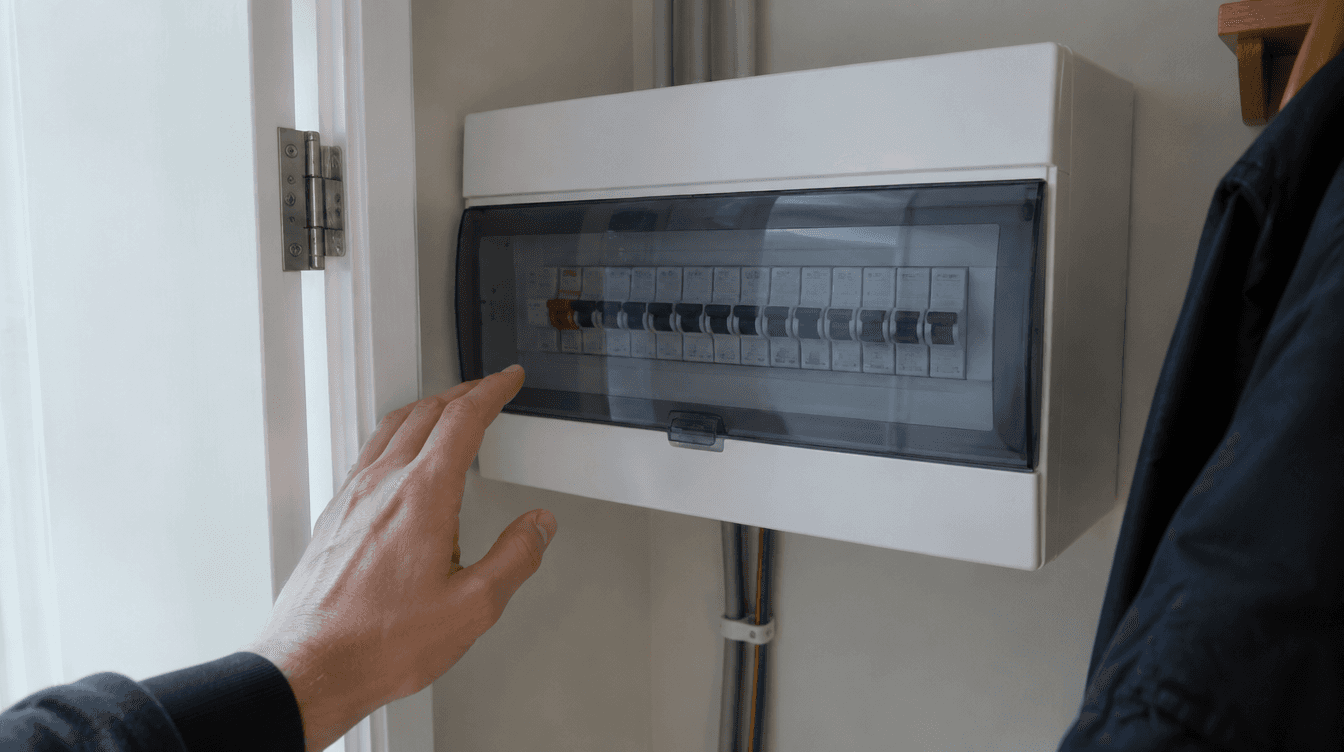
Look at the front of your consumer unit for a tripped breaker. Reset it once. If it trips again, stop and call an engineer.
Check that any clearly labelled external isolator switch is on.
Look, without touching, to see that the inverter's vents are not blocked.
Note when the problem started and anything that happened around then: a power cut, building work, a firmware update.
Do not open the inverter or remove any cover, touch cabling or anything at the meter, do any electrical testing, reset a breaker repeatedly, or try to update firmware yourself. There is nothing to be gained and the risk is real.
Signs that mean call an engineer now
Electrical Safety First's advice on solar panels is clear: do not ignore burn marks, arcing sounds (buzzing or crackling), fuses blowing, circuit breakers tripping, or equipment that is hot. London Fire Brigade lists scorch marks and breakers that trip for no obvious reason among the warning signs of an electrical fault.
If you notice any of these:
Do not touch the inverter.
If it is safe to do so, switch the system off at the labelled isolator or at your consumer unit.
If there is smoke or fire, leave the building and call 999.
Otherwise, call an engineer and do not use the system until it has been checked.
If your inverter reports an arc fault, treat it as urgent. Do not keep resetting it.
Is it still under warranty?
Inverter warranties vary by manufacturer and model. The Energy Saving Trust says most inverters have a warranty of at least five years, often extendable. Some current models carry longer cover if they are registered and kept connected to the manufacturer's monitoring. Check your paperwork, or ask us to check it for you.
If your system is older and on the Feed-in Tariff, replacing the inverter will not end your FIT. Our guide to inverter replacement on a Feed-in Tariff system explains the options.
Frequently asked questions
How long does an inverter last?
The Energy Saving Trust puts a typical inverter life at around 10 to 15 years, which is shorter than the panels.
My app says nothing is happening but the inverter screen looks normal.
That usually points to a monitoring or Wi-Fi problem rather than an inverter fault.
Is a humming inverter normal?
A faint hum is normal. Buzzing, crackling or a sudden change in sound is not.
Can you look at an inverter you did not fit?
Yes.
Book a solar inspection. If your inverter is showing any of these signs, we will find out what is wrong and tell you whether it needs repairing or replacing.
Latest Articles


Ready to Start Saving with Solar?
Get your free no-obligation quote today. Our experts will design the perfect system for your home.
Free Home Survey
MCS Certified
Finance Available


Quick Links
Services
Contact
© 2026 Solar Panels London. All rights reserved.