Rated 4.8 on Trustpilot
Read Reviews

·
Solar Panels
What Happens at a Solar Survey?
What a surveyor checks on your roof, in your loft and at your consumer unit, what you should receive afterwards, and what you can have ready to make the visit worth more.
By
Solar Panels London
·
Last reviewed
A solar survey is where a quote stops being a guess. It is a visit to your home to check the roof, the structure, the shading, the electrics and where the equipment could go, so that the system you are quoted is one that will actually fit and work.
MCS, the certification scheme for domestic solar, is explicit that shading usually cannot be judged properly from a desk. Its standard notes that an accurate estimate of shade effects will typically require a site visit. That is the short answer to why the survey matters.
Key points
The survey checks your roof, its structure, shading, your electrics and equipment locations.
MCS requires the roof structure to be checked by a suitably competent person.
You should receive a written performance estimate as part of your quote.
Having your electricity use and a few photos ready makes the visit more useful.
What gets checked
The roof
Which way each roof face points, its pitch, and how much usable area there is once chimneys, roof windows, vents and edge margins are taken out. The covering matters too: slate, clay tile, concrete tile and flat roofs are all fixed differently.
The structure
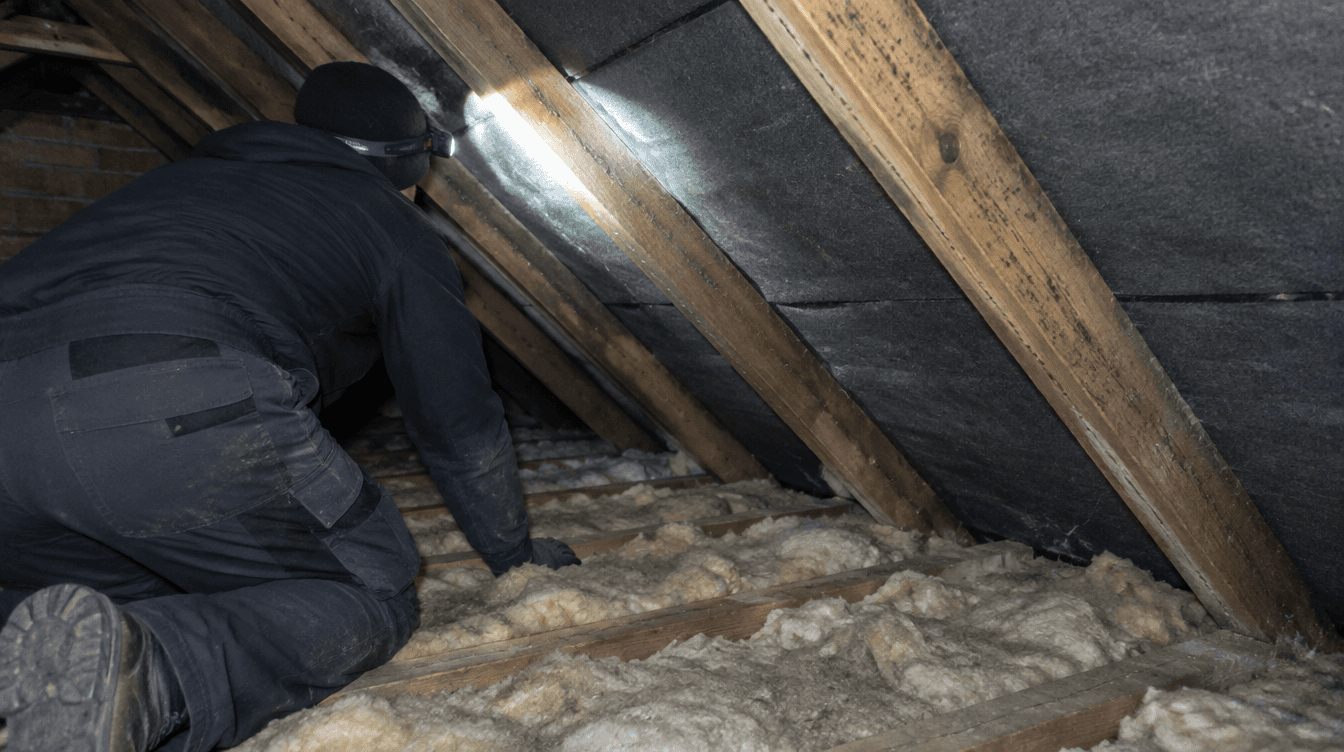
MCS requires the roof structure to be checked by a suitably competent person to make sure it can carry the extra load, and a qualified structural engineer to be consulted where the structure is in any way unusual or there is any doubt. That usually means looking in the loft at the rafters and their condition.
Shading
Chimneys, trees, neighbouring buildings, dormers and extensions all cast shade that moves through the day and the year. The survey records it so the generation estimate reflects your roof rather than an ideal one. Where there is shading, the estimate should show how it was allowed for.
The condition of the roof
Separate from whether it can hold the weight: how much life the covering has left. The standards do not require this, but it matters. A roof that will need replacing in a few years is better dealt with before the panels go on. Our guide on whether you need a new roof before solar explains why.
Your electrics
The consumer unit, the earthing arrangement, the meter position and the route cables would take. Whether there is room for an inverter and isolators. Whether there is already solar, an EV charger or a heat pump, because existing generation counts towards the network operator's limits.
Where a battery could go
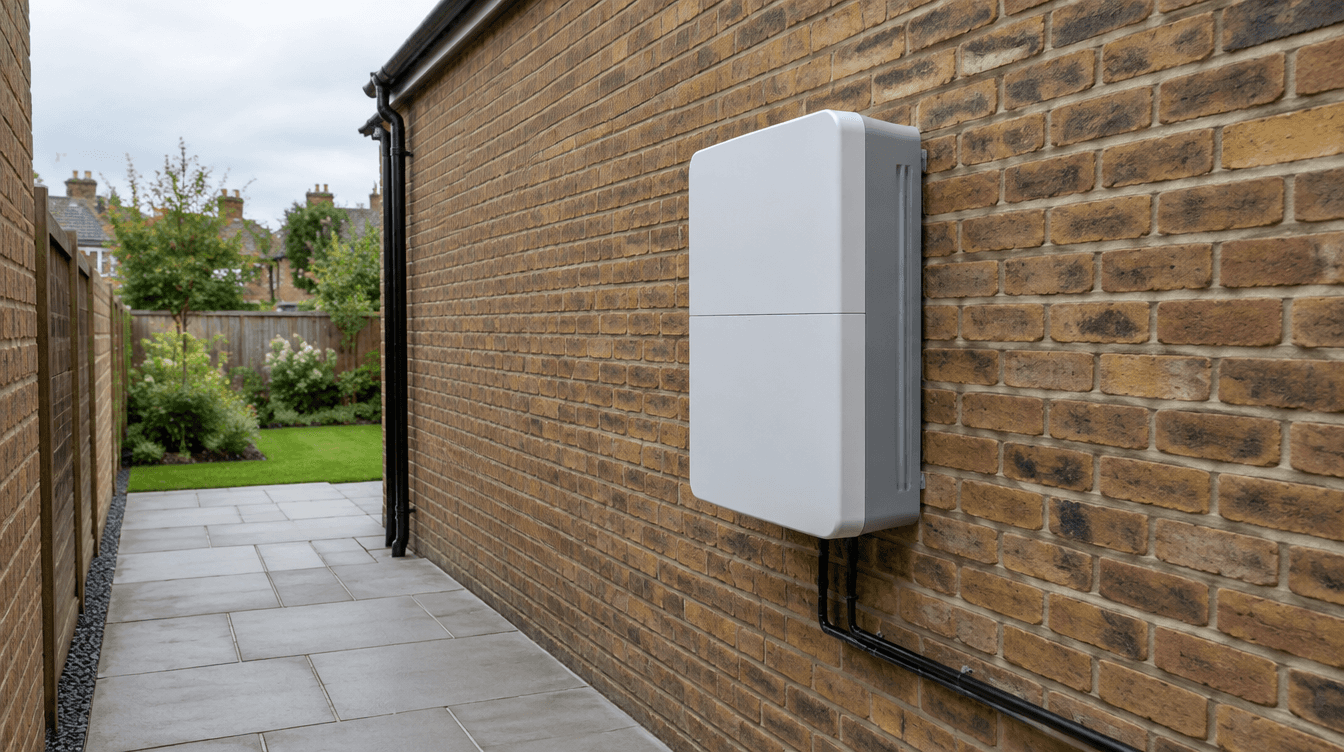
If you want a battery, the survey decides where. Fire-safety best practice set out in the specification PAS 63100 says batteries should not go in rooms where people sleep, on escape routes such as hallways, stairs and landings, or in lofts and roof voids. It also says that where practicable they should be installed outdoors, but not within 1 metre of doors, windows, ventilation openings or escape routes. Garages, outbuildings and suitable external walls are usually the best options. In a narrow London side return, that 1 metre rule can rule out the obvious spot, so this can take some thought.
Access and paperwork
How the scaffold would go up, and whether it would need to stand on the pavement or road. Whether you are in a conservation area or your home is listed, both of which affect planning. And whether your system is likely to need a G98 notification or a G99 application to UK Power Networks.
What you should receive afterwards
Your quote should come with a design and a written performance estimate. MCS requires the estimate to be based on your system's size, orientation, pitch, location and shading, and to include an estimate of how much of the electricity you are likely to use yourself, with and without a battery. It must also carry a disclaimer that it is guidance for the first year and not a guarantee.
You should also get a layout showing where the panels will go, and it is good practice for a quote to include datasheets for the main equipment. The Renewable Energy Consumer Code requires the performance estimate to be specific to your property.
If a quote arrives without these, it is worth asking why.
How to prepare
A few things make the survey more useful:
Your annual electricity use in kWh, from a bill or your supplier's app. MCS's estimate of how much you will use yourself is based on it.
How you use the house. Whether someone is usually home in the day, and any plans for an electric car or heat pump.
Loft access cleared, if you have a loft.
Photos of your consumer unit and meter, if the surveyor asks in advance.
Details of any existing solar, battery, EV charger or heat pump.
Your roof warranty paperwork, if the roof is recent. MCS says the roof warranty provider should be consulted where the covering is under warranty.
Your planning position, if you know you are in a conservation area or your home is listed.
Frequently asked questions
How long does a survey take?
Long enough to see the roof, loft, consumer unit and possible equipment locations properly. It depends on the house.
Can a survey be done remotely?
Some early estimates are done from aerial images, but MCS says shading typically needs a site visit, and remote estimates have to warn that performance may differ once site factors are known.
Do I have to commit to anything?
No. The survey is the basis for the quote.
Can you survey for a battery on an existing system?
Yes. The checks focus on the existing inverter, the electrics and where a battery could safely go.
Request a solar survey. We will look at your roof, your electrics and where everything could go, and tell you honestly what will work.
Latest Articles


Ready to Start Saving with Solar?
Get your free no-obligation quote today. Our experts will design the perfect system for your home.
Free Home Survey
MCS Certified
Finance Available


Quick Links
Services
Contact
© 2026 Solar Panels London. All rights reserved.